Opening Hours
 Book Online
 07 3003 0801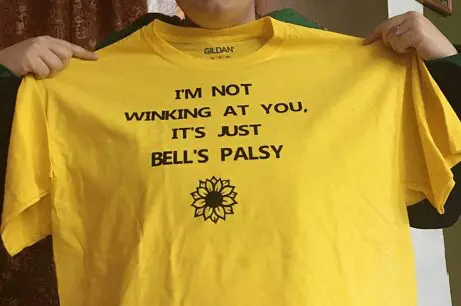
Bell’s palsy can feel overwhelming — but most people recover fully, and the right treatment early makes a real difference.
At Knead Myotherapy Brisbane, we combine Low-Level Laser Therapy (LLLT) with clinical guidance to support faster, more complete recovery.
Here’s what the research tells us:
✅ See your GP first — oral corticosteroids within 72 hours of onset are the single most important step you can take
✅ Add laser therapy — a 2024 meta-analysis of 12 clinical trials confirmed LLLT significantly improves nerve recovery, facial symmetry, and function
✅ Start both together — our clinical experience shows that patients who begin laser therapy while still on their steroid course tend to recover faster than those using either treatment alone.
The research suggests approximately 6 weeks of laser treatment produces consistent results. We’ve seen good outcomes in as little as 2 weeks when laser commences alongside the steroid course.
OLDER BELLS PALSY’S (6+MONTHS) DO NOT RESPOND TO LASER – PLEASE DON’T WASTE YOUR TIME AND MONEY.
📍 Brisbane CBD & surrounds
📞 Book online at kneadworkmassage.com.au
What is Bell’s Palsy?
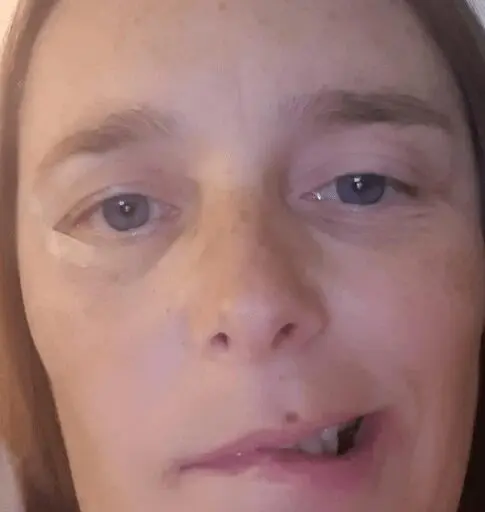
Bell’s palsy is a sudden weakness or paralysis affecting one side of the face. It happens when the facial nerve becomes inflamed and swells inside the narrow bony tunnel it travels through in the skull — compressing the nerve and reducing its ability to function normally.
It is not a stroke. It is usually a temporary, treatable condition.
The most widely accepted cause is a reactivation of the herpes simplex virus — the same virus responsible for cold sores.
Who Gets Bell’s Palsy?
Bell’s palsy affects approximately 11–40 people per 100,000 annually. It can occur at any age – however older individuals and those with more severe paralysis at onset tend to have a somewhat slower recovery trajectory. Diabetes and pregnancy are associated with higher incidence.
How Does It Feel?
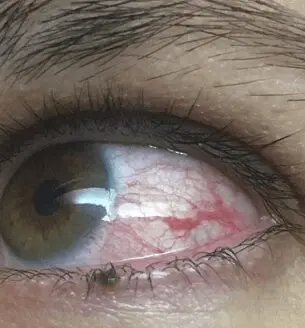 Symptoms typically appear suddenly and may include:
- One-sided facial droop and difficulty fully closing the affected eye
- A lopsided smile and loss of facial expression on the affected side
- Difficulty drinking, eating, or speaking clearly
- Excessive tearing or dry eye due to reduced or absent blinking
- Pain or aching behind the ear, sometimes preceding the facial weakness by a day or two
How Long Does Bell’s Palsy Last?
Statistically, most people (approximately 70–80%) recover fully – early treatment improves those outcomes.
The main risk of delayed or inadequate treatment is incomplete recovery, or synkinesis — where the nerve heals improperly and causes involuntary facial movements.
Treatment in the first 72 hours matters more than anything else.
What Should You Do to Recover from Bell’s Palsy?
1. Get Medical Assessment Immediately
Attend your GP or an Emergency Department.
Any sudden facial paralysis needs urgent medical evaluation to rule out stroke and to start the most important treatment: oral corticosteroids (prednisolone).
Corticosteroids have the strongest possible evidence classification in clinical medicine. The critical window is within 72 hours of symptom onset — starting steroids inside that window significantly improves your chances of a full recovery. After 72 hours, the benefit drops off.
For more severe cases, your GP may also prescribe an antiviral medication alongside the steroids.
2. Protect Your Eye Immediately
- During the day: Preservative-free lubricating eye drops every 1–2 hours
- At night: Lubricating ophthalmic ointment (e.g., Lacrilube or Refresh PM), plus gentle taping to achieve partial eye closure
- Avoid a standard eye patch — if the eye is open beneath it, the patch abrades the cornea rather than protecting it
- If you notice redness, pain, or visual changes, seek ophthalmology review promptly
3. Begin Low-Level Laser Therapy (LLLT / PBMT)
LLLT is the most scientifically validated physical intervention available for Bell’s palsy.
A 2024 meta-analysis of 12 randomised controlled trials (nearly 600 patients) found significant improvements across every major recovery measure.
We recommend starting LLLT as soon as possible after your first dose of steroids. Our clinical experience aligns with the evidence: patients who combine laser therapy with their steroid course tend to recover faster than those using either treatment alone.
LLLT works by delivering near-infrared light directly to the facial nerve tissue. It:
- Restores energy production in damaged nerve cells
- Reduces inflammation and swelling — directly relevant in Bell’s palsy, where nerve compression inside the bony canal is the core problem
- Improves lymphatic drainage — enhancing the clearance of inflammatory fluid and metabolic waste from the affected tissue
- Accelerates nerve regeneration — supporting the repair of the myelin sheath and restoration of nerve conduction
What Shouldn’t You Do?
- Do not delay getting a GP assessment and cortisone. The 72-hour window is real and it closes fast.
- Do not use electrical stimulation as a primary treatment. While once popular, electrical stimulation has shown no consistent benefit over placebo in controlled trials, and laser therapy has been shown to produce significantly better outcomes than ES in head-to-head comparisons. We don’t include it in our protocol.
- Do not perform aggressive facial massage or deep tissue work in the first 2–3 weeks. The nerve is acutely inflamed. Heavy-handed techniques risk worsening irritation and can promote the development of abnormal movement patterns.
How We Treat Bell’s Palsy at Knead Myotherapy
Once you’ve seen your GP and started steroids, laser therapy can support a faster, more efficient recovery.
The evidence suggest that approximately 6 weeks** of treatments is the best practice dose. We have seen good results in as little as 2 weeks if laser commences while the steroid treatment is in place.
**That comes from:
1. Javaherian et al. (2020) — “Efficacy of low-level laser therapy on management of Bell’s palsy: a systematic review” — Lasers in Medical Science, DOI: 10.1007/s10103-020-02996-2
This systematic review of 4 RCTs (n=171) found that the 830 nm / 100 mW / 6-week protocolwas the most consistently beneficial. It explicitly noted that shorter protocols (4 weeks or 15 days) produced inconsistent results, identifying treatment duration as a critical variable.
2. Alayat et al. (2014) — “Efficacy of high and low level laser therapy in the treatment of Bell’s palsy: a randomised double-blind placebo-controlled trial” — Lasers in Medical Science, DOI: 10.1007/s10103-013-1352-z
This landmark RCT used an 8-point protocol, 3 sessions per week, over 6 weeks — and both laser groups significantly outperformed the exercise-only control group.
The 2024 meta-analysis (Deng et al., DOI: 10.1007/s10103-024-04237-2) pooled 12 RCTs and confirmed these parameters as the basis for the evidence — the protocols producing significant results in included trials consistently ran 6+ weeks at 2–3 sessions per week
Related Posts
Dry Needling Brisbane
Low level laser therapy
Wry Neck Brisbane
Frequently Asked Questions (FAQs)
When does Bell's palsy go away?
-
-
Without Low Level Laser treatment, most people see improvement within 6 weeks, with full recovery often taking up to 9 months. However, our experience shows that starting Low Level Laser therapy early produces far better outcomes.
-
Treatment within the first week of symptoms: ~88% chance of full recovery
-
Treatment started between 7–14 days: ~83% chance of recovery
-
Treatment delayed until 14–21 days: recovery likelihood drops to ~61%
Even without treatment, the condition generally resolves over time, with about 71% of people recovering within 6 months. However, around 23% of those affected by Bell’s palsy are left with lasting issues, such as facial weakness, abnormal tear production (“crocodile tears”), one-sided facial spasms, or involuntary twitches.
-
Who treats Bell's palsy?
If you have been diagnosed with Bell’s palsy it is IMPERATIVE that you commence steroid treatment immediately – your GP can provide these. The next most important thing is to consult with a Myotherapist to receive at least 3×30 minute low level laser sessions within 9 days of each other. Low level laser has been proven to boost the immune response to the herpes virus while simultaneously reducing neural swelling.
Low Level Laser is a game changer for resolving Bell’s palsy symptoms.
Why does bell's palsy cause ear pain?
The swollen nerve (the facial nerve) emerges from the brain and skull just behind the ear, this is an area where the nerve can compress against the skull and become irritated.
Steroids for bell's palsy?
If you have been diagnosed with Bell’s palsy it is IMPERATIVE that you commence steroid treatment immediately. Early treatment greatly reduces recovery time and increases the likelihood of full recovery.
Is bell's palsy a stroke?
Bell’s palsy is not a stroke, it does not increase the risk of stroke and it is not life threatening. A stroke occurs inside the brain, Bells palsy is the result of an infection in nervous tissue that has left the brain.
Can bell's palsy be reversed?
In most circumstances yes.
-
Without the use of Low Level Laser, Improvements usually occur within 6 weeks and a complete recovery within 9 months. In our experience using Low Level Laser consistently in the early stages provides results FAR superior to this.
-
Getting treatment within the first week of symptoms leads to an 88% likelihood of recovery.
-
Treatment commencing between 7-14 days has an 83% likelihood of recovery.
-
Treatment that does not start until 14-21 days has a 61% chance of recovery
-
The condition usually resolves completely given time (71% within 6 months).
-
Approximately 23% of individuals who suffer Bell’s palsy are left with ongoing symptoms such as facial weakness, abnormal tears (crocodile tears), one sided facial spasm and involuntary twitches.
Can bell's palsy be cured?
In most circumstances yes.
- Without the use of Low Level Laser, Improvements usually occur within 6 weeks and a complete recovery within 9 months. In our experience using Low Level Laser consistently in the early stages provides results FAR superior to this.
- Getting treatment within the first week of symptoms leads to an 88% likelihood of recovery.
- Treatment commencing between 7-14 days has an 83% likelihood of recovery.
- Treatment that does not start until 14-21 days has a 61% chance of recovery
- The condition usually resolves completely given time (71% within 6 months).
Approximately 23% of individuals who suffer Bell’s palsy are left with ongoing symptoms such as facial weakness, abnormal tears (crocodile tears), one sided facial spasm and involuntary twitches
Can bell's palsy get worse?
Technically, yes. Bell’s palsy that last longer than 3months can cause neuroplastic change – meaning the brain and nervous system become better at making inflammation and turning off the regions that aren’t working. This is a gradual process.
Can bell's palsy kill you?
Bell’s palsy is non life threatening.
How bell's palsy affects the eye?
- The worst affects of Bell’s palsy on the eye occur because the eyelid does not close and blinking is inhibited. In the early stages this will lead to excessively watery eyes.
- Changes to the salivary glands from the altered facial nerve can cause a phenomenon known as crocodile tears – tears forming from salivation.
- The eye can dry out and become susceptible to debris and scratching. It is important to protect the eye from bright light and particles and maintain lubrication with some form of artificial tear.
How does bell's palsy go away?
-
-
Bell’s palsy often improves on its own, but up to 27% of people may have ongoing symptoms. The key is early treatment—starting cortisone quickly makes the biggest difference.
-
First week of symptoms → ~88% chance of full recovery
-
7–14 days → ~83% chance
-
14–21 days → ~61% chance
Without Low Level Laser, recovery usually takes 6 weeks to improve and up to 9 months to fully resolve. With early Low Level Laser treatment, results are much faster and more effective.
-
How to know when bell's palsy is improving?
The benchmarks of improvement will vary from person to person – less watering of the eye, being able to close the eye, not drooling because the mouth is working better, less ear pain – these are common features of someone who has had a few Low Level Laser interventions.
Is bell's palsy permanent?
Not usually, but in up to 27% of cases, there is some level of ongoing symptoms. Early treatment within the first week improves likelihood of complete recovery to 88%. Waiting till 3 weeks lessens the likelihood to 61%.
What causes bell's palsy in a child?
Bell’s palsy is caused by the Herpes virus affecting the seventh cranial nerve – the facial nerve. Exposure to herpes when your immune system is weak is the likely explanation.
Is bell's palsy hereditary?
If you are wondering is Bell’s palsy is hereditary at this stage a firm hereditary basis has not been found. However there are familial clusters suggesting there could be some genetic link.
Is bell's palsy genetic?
There have been cases of familial bells palsy and so whilst there is no definitive answer there could be a genetic aspect to the condition.
What does bell's palsy look like?
Individuals affected with Bells palsy will manifest symptoms differently depending on the severity of the infection. It is always one sided, usually affecting the eye and the mouth. An individual asked to smile will not be able to raise the mouth on the affected side. An individual asked to raise their eyebrows will not be able to raise the eyebrows on the affected side. The eye on the affected side may look droopy and be watering.
When bell's palsy doesn't go away?
-
Bell’s palsy is considered a self- limiting condition. However studies suggest that upto 27% of individuals will have ongoing symptoms. Early treatment is the key to rapid recovery – getting cortisone is the single most important factor an individual can do to reduce the duration of symptoms.
-
Without the use of Low Level Laser, Improvements usually occur within 6 weeks and a complete recovery within 9 months. In our experience using Low Level Laser consistently in the early stages provides results FAR superior to this.
-
Getting treatment within the first week of symptoms leads to an 88% likelihood of recovery.
-
Treatment commencing between 7-14 days has an 83% likelihood of recovery.
-
Treatment that does not start until 14-21 days has a 61% chance of recovery
-
The condition usually resolves completely given time (71% within 6 months).
Can bells palsy be caused by Covid 19?
Bells palsy is caused by the herpes virus. At the time of publication, there are instances of individuals receiving an American COVID-19 vaccine that have developed Bells palsy – it is too early to determine the severity at this time. It is possible that individuals with weakened immune systems who have been exposed to herpes and receive the vaccine are manifesting symptoms because the vaccine further weakens their immune system for 48-72 hours after application.
Are bell's palsy and trigeminal neuralgia related?
No. But there have been studies that have shown approximately 50% of Bell’s palsy sufferers have some inflammation of the trigeminal nerve.
How is bell's palsy differentiate from stroke?
Bells palsy only affects one side of the face. After a stroke eye movement is not affected, however Bells palsy impairs eye movement. A stroke occurs in the brain (Central nervous system), the location of the herpes infection that is causing the swelling is in neural tissue that is outside of the cerebrum (peripheral nervous system).
Who treats Bell's palsy Brisbane?
Myotherapist Roger Morelli at Knead Myotherapy Brisbane has experience rapidly resolving Bell’s palsy using the latest scientific methods – including Low Level Laser. Low Level Laser is a game changer for rapidly resolving the nerve swelling responsible for facial paralysis and improving the immune response to the herpes virus responsible for the neural swelling causing the paralysis.
https://www.healthdirect.gov.au/bells-palsy
https://www.racgp.org.au/afp/2016/november/a-general-practice-approach-to-bell%E2%80%99s-palsy/
https://www.rch.org.au/kidsinfo/fact_sheets/Facial_palsy_Bells_palsy/
https://www.mayoclinic.org/diseases-conditions/bells-palsy/diagnosis-treatment/drc-20370034
https://www.ncbi.nlm.nih.gov/pmc/articles/PMC3152161/
https://edisciplinas.usp.br/pluginfile.php/4614262/mod_resource/content/1/fallah2017.pdf
https://fac.ksu.edu.sa/sites/default/files/27-nmesidiopathic_facial_bell_palsy.pdf
https://www.ncbi.nlm.nih.gov/pmc/articles/PMC3907546/
https://emergencyfoundation.org.au/bells-palsy-trial-in-children/
https://pdfs.semanticscholar.org/8cae/9368bff73560acb9707497a4b86205bbf30d.pdf
http://citeseerx.ist.psu.edu/viewdoc/download?doi=10.1.1.840.6954&rep=rep1&type=pdf

Roger Morelli
Latest posts by Roger Morelli (see all)
- Remedial Massage Burnett Lane Brisbane CBD - April 14th, 2026
- Lymphatic Drainage Facial Massage Brisbane - August 13th, 2025
- Lymphatic Drainage Massage Benefits - October 18th, 2024